For more than two centuries, the Dialectic and Philanthropic Societies, known simply as “DiPhi,” have occupied a unique place in the life of the University of North Carolina. Founded in 1795, less than a year after the university opened its doors, the societies became the center of student intellectual life, fostering debate, public speaking, leadership, and civil discourse. They remain the oldest student organizations at Carolina and among the oldest collegiate debating societies in the United States.
Throughout the history of Alpha Sigma, many brothers have found a second home in the chambers of the Dialectic and Philanthropic Societies. While Chi Psi cultivated fellowship and leadership at the Lodge, DiPhi offered an arena where young men sharpened their minds, tested their convictions, and learned the art of persuasion. The overlap between these organizations is hardly surprising. Both value intellectual curiosity, civic engagement, and the development of principled leaders.
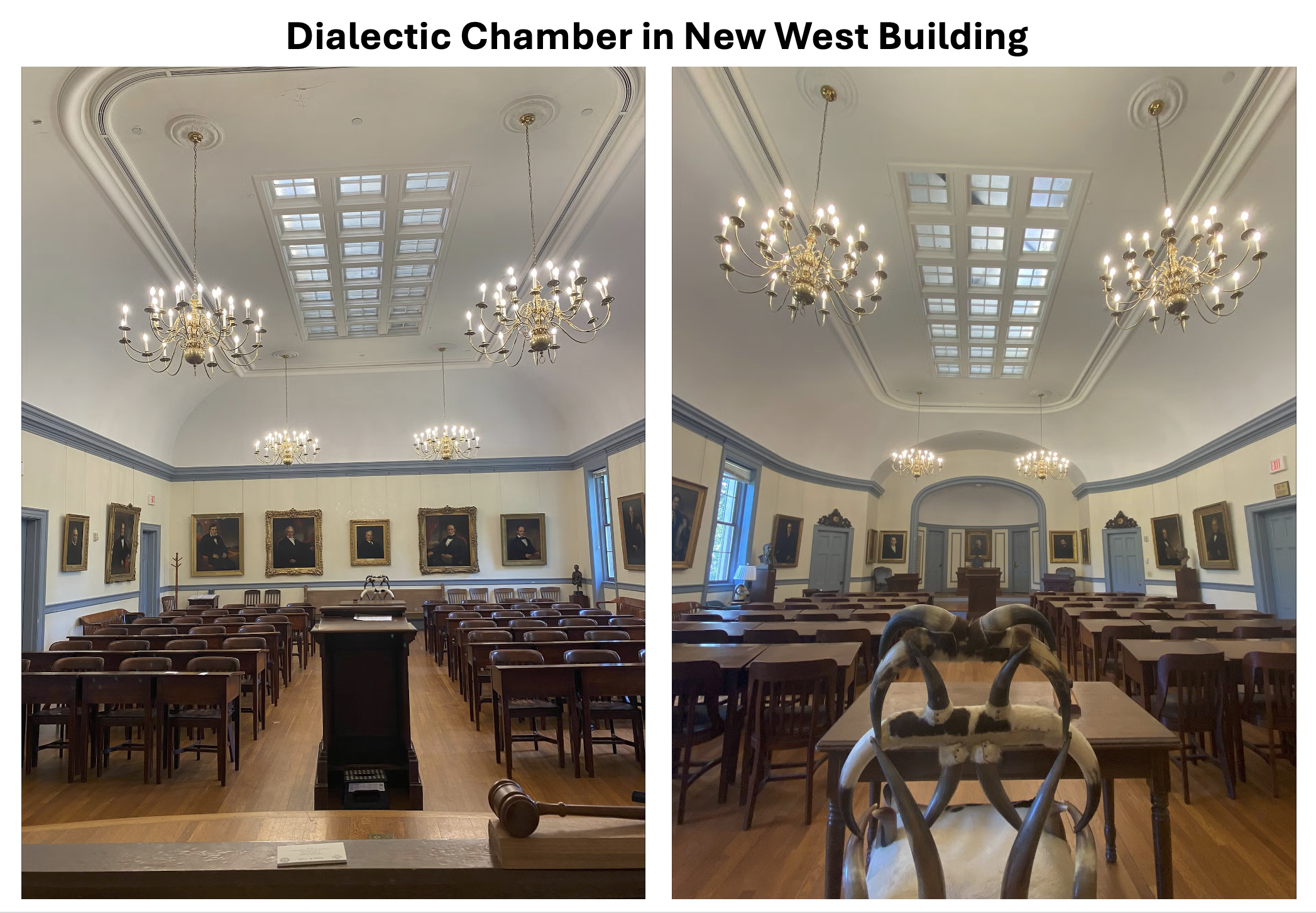
The Dialectic Tradition
Among the brothers who chose the Dialectic Society were men whose Carolina careers spanned nearly a century. The roster includes Oliver Rowe 1925, Walter Cressman 1926, Parmelee Ward 1928, Walter Spearman 1929, Whitner Bissell 1932, John Sanders 1950, Banks Talley 1950, Edward Stevens 1953, Joel Fleishman 1955, Peter Range 1963, William Moss 1978, Craig Brown 1979, Gene Rossitch 1981, John Ager 1983, David Pfaff 1986, David Schnorrenberg 1986, Matt Heyd 1992, and Taylor Bacques 2013.
These brothers participated in a society whose members debated some of the most important questions facing the university, the state, and the nation. In the 19th century, DiPhi debates addressed issues ranging from education and governance to slavery and public policy. The societies also built extensive libraries that eventually became foundational to the growth of the university’s own collections.
Several of these Chi Psi brothers went on to distinguished careers. Among them was Joel Fleishman ’55, one of the nation’s leading scholars of philanthropy and public service, whose lifelong commitment to civic leadership reflected the values championed by both Chi Psi and DiPhi.
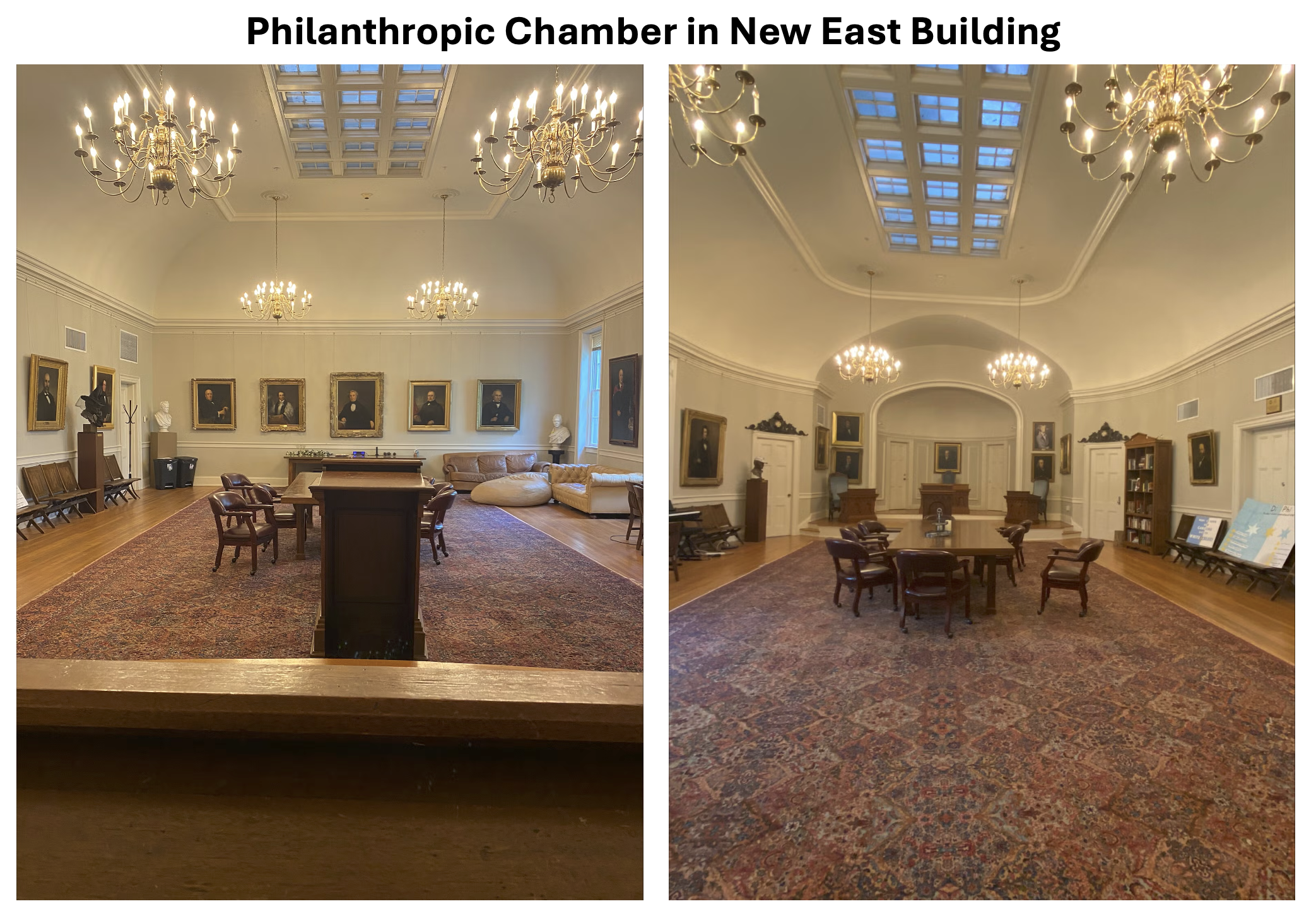
The Philanthropic Tradition
The Philanthropic Society likewise attracted a remarkable group of Alpha Sigma brothers: Travis Thompson 1926, Robert Clark Atwood 1933, Sam Leager 1936, Cale Burgess 1943, John Lackey 1947, John Ager 1983, Douglas Richardson 1983, Richard Lee McGee 1985, Ramesh Krishnaraj 1991, Duncan Boothby 1993, David Kaplan 1993, Sean Wiswesser 1996, Carl Rush 2007, Joseph Patrick Ward 2007, and Nick Wagner 2009.
Historically, the Philanthropic Society served as the great rival to the Dialectic Society. Their spirited debates, competitions, and traditions helped shape Carolina culture for generations. The societies’ influence became so significant that many of the traditions now associated with UNC, including the famous Carolina blue and white colors, can trace their origins to the historic rivalry between the Di and the Phi.
For Chi Psi brothers, participation in the Philanthropic Society represented another avenue for leadership and engagement. The parliamentary procedures, formal debates, and committee work that characterized society life prepared generations of students for careers in law, business, medicine, education, and public service.
One Organization, Two Traditions
In 1959, the two historic rivals formally united under a joint organization while preserving their distinct identities and traditions. Today, members work together to promote thoughtful debate, intellectual inquiry, and civil disagreement, values that resonate strongly with Chi Psi’s commitment to developing well-rounded leaders.
A Shared Commitment to Leadership
Although separated by generations, the brothers listed above shared a common experience. They belonged to two of Carolina’s most enduring institutions: Chi Psi and DiPhi. One provided lifelong brotherhood; the other offered a forum for ideas. Together, these organizations helped shape young men into leaders capable of engaging thoughtfully with the world around them.
As Alpha Sigma reflects on its history, the connection between the Lodge and the debating chambers of New West and New East stands as a reminder that fraternity life at its best is about more than friendship and tradition. It is also about cultivating intellectual curiosity, civic responsibility, and the confidence to stand before one’s peers and to make a case for what one believes.
For nearly a century, Chi Psi brothers have carried that tradition forward, moving from the Lodge to the rostrum, and from Carolina into lives of leadership and service.
The University of North Carolina and Carolina alumni track student participation in extracurricular activities. See a list of Alpha Sigma’s members who affiliated during college with forensics here.